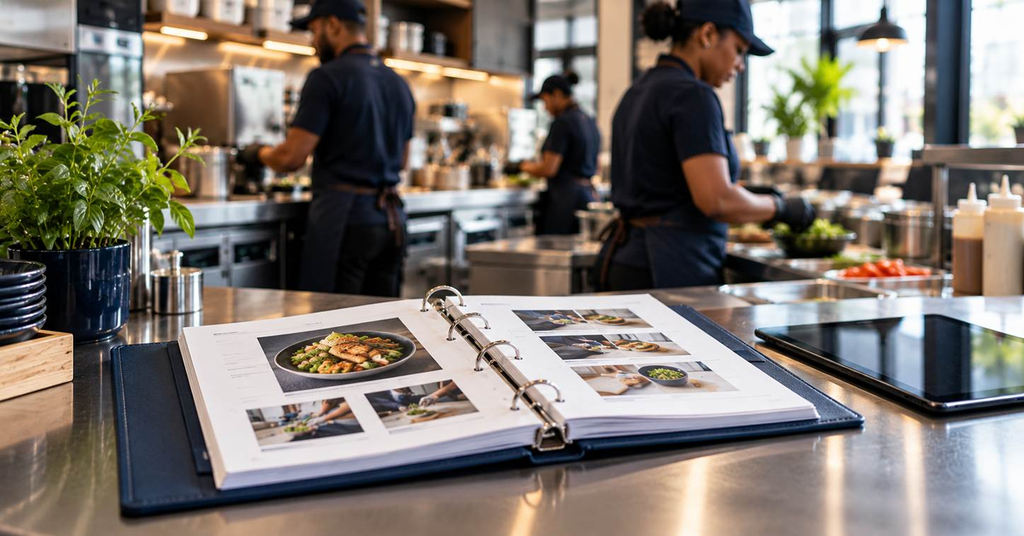
When business owners think about franchising, they usually think about the brand: the logo, the store design, the name on the sign. But the most valuable asset in any franchise system isn’t the logo. It’s the operations manual.
Your operations manual is what allows a franchisee in Durban to deliver the same experience as your flagship in Johannesburg, without calling you every day. It’s the difference between a franchise network and a group of loosely connected businesses sharing a name.
Why the manual matters more than the logo
Customers don’t return to a brand because of its logo. They return because they know what to expect: the same quality, the same service and the same experience every time. That consistency doesn’t happen by accident. It comes from clear, documented standards that everyone in the network follows.

A strong operations manual protects your brand, reduces your personal involvement and gives franchisees the confidence that they’re buying into a proven system. It’s also a key part of what franchisees pay for. Without it, you’re selling a name, not a business model.
The six sections every working manual needs
Every business is different, but effective operations manuals share a common structure.

- 1. Brand standards. How your logo, colours, signage, uniforms and tone of voice are used, so every location looks and feels like the original.
- 2. Daily operations. Opening and closing procedures, service steps, stock management, cash handling and hygiene or safety requirements.
- 3. People and training. How to recruit, onboard and train staff, including role descriptions and training modules that every franchise team follows.
- 4. Customer experience. Service standards, how to handle complaints and the quality checks that keep the experience consistent.
- 5. Contingency procedures. What to do when things go wrong: power outages, supplier delays, staff shortages, equipment failures or emergencies.
- 6. Reporting and systems. How sales and performance are reported, which KPIs are tracked, and the IT tools that give you visibility across every location.
Common mistakes to avoid
Too vague. “Provide excellent service” isn’t a standard. “Greet every customer within 30 seconds of entering” is. If a new staff member can’t act on it, rewrite it.

Too long. A 400-page manual nobody reads is as useless as no manual at all. Use checklists, visuals and short sections that people can find quickly.
Never updated. Your business will change. Prices, suppliers, products and processes evolve, and your manual needs to keep up. Build in a regular review, at least once a year.
Written by one person. The best manuals are built with the people who do the work every day, then tested in a real location before they’re rolled out.
Keeping the manual alive: training and field support
A manual on its own isn’t enough. It needs to be backed by training that brings it to life and field support that checks it’s being followed. That’s how standards stay consistent as the network grows.

When this is done well, the results are measurable. Infinity Brands clients see a 75% reduction in operational disruptions and an average 8% revenue increase per location through standardised systems. They also open new locations with 60% less personal involvement, because the system, not the founder, carries the knowledge.
How Infinity Brands can help
We build operations manuals and training systems as part of full franchise development, working alongside you and your team to document what makes your business work. We also create the contingency procedures and field support structures that keep every location on track.
Book a consultation with Infinity Brands to find out what your operations manual should include.