The blueprint for scalable growth in South Africa
There’s a moment every successful business owner reaches a point where growth starts to feel… heavy.
What once felt exciting, opening a second location, hiring more staff, expanding into new regions – suddenly becomes overwhelming. You’re no longer just building a business; you’re managing complexity. And in a market like South Africa, where regional nuances, infrastructure challenges, and regulatory requirements add layers of difficulty, scaling can feel like trying to multiply yourself.
This is where franchising enters the conversation.
But here’s the truth most people don’t talk about: not every successful business is franchisable.
And that’s exactly where many entrepreneurs go wrong. Let’s unpack what actually makes a business franchisable, and more importantly, how to position your business to scale sustainably without losing what made it successful in the first place.
The Hidden challenge: Why growth becomes a bottleneck
If you’ve built a profitable business with one or a few locations, you’ve already done something remarkable—especially in the South African economic climate.
But expansion exposes cracks.
You open a second location, and suddenly:
- Quality drops
- Staff need constant supervision
- Systems break down
- Customers don’t get the same experience
Sound familiar?
This isn’t a failure of your business, it’s a signal. A signal that your business may not yet be structured for replication. And franchising, at its core, is about replication at scale.

What actually makes a business franchisable?
Let’s move beyond theory and into what truly matters.
1. A proven, profitable business model
Before anything else, your business must work consistently. Not just in one location, but ideally across different environments or customer segments.
A franchisable business:
- Has predictable revenue streams
- Maintains healthy profit margins
- Performs well despite external pressures (like load shedding or supply disruptions)
Why does this matter??
Because franchisees aren’t buying an idea, they’re buying certainty. They want a system that works, not one that still needs figuring out.
2. Systems that replace you
Here’s the uncomfortable truth: if your business depends on you, it’s not franchisable yet.
Many founders operate with knowledge stored “in their heads”, how to manage staff, deal with suppliers, handle customer complaints. But franchising demands transferable knowledge.
This means:
- Documented processes
- Training systems
- Standard operating procedures (SOPs)
- Quality control mechanisms
As highlighted in the Infinity Brands framework, transforming your business knowledge from “in your head” to “in the system” ensures every location delivers the same experience, without your constant involvement.
3. A strong, recognisable brand

People don’t just buy products, they buy trust. A franchisable business has:
- A clear brand identity
- Consistent customer experience
- Emotional connection with its audience
Think about it, customers should know exactly what to expect, whether they’re in Pretoria, Cape Town, or Durban.
4. Simplicity and replicability
If your business is too complex to teach, it’s too complex to franchise. Franchisable businesses are:
- Easy to understand
- Structured for training
- Designed for operational efficiency
This doesn’t mean “basic”, it means systemised. The goal is to enable someone else to run your business successfully without needing your years of experience.
5. Market demand across locations
A great concept in one area doesn’t always translate elsewhere. South Africa’s diverse markets require adaptability.
A franchisable business:
- Solves a common problem
- Appeals to a broad audience
- Can adapt to regional differences
Without demand, expansion becomes risk – not opportunity.
6. Financial viability for franchisees
This is often overlooked. Your business might be profitable, but is it profitable for someone else to run?
A franchisable model must:
- Offer strong return on investment (ROI)
- Have manageable startup costs
- Deliver sustainable margins
If franchisees can’t make money, the system collapses.
7. Legal and compliance readiness
Franchising in South Africa comes with legal complexity:
- Franchise agreements
- Disclosure documents
- B-BBEE considerations
- Consumer protection laws
Without proper structure, expansion can expose your business to serious risk. This is where many businesses stall, not because they lack potential, but because they lack guidance.
The real cost of getting it wrong
Let’s be blunt. Expanding without proper franchising systems can cost millions.
According to industry benchmarks referenced in franchise development frameworks, a failed expansion location in South Africa can cost upwards of R4 million.
And it’s not just financial. There’s also:
- Brand damage
- Operational chaos
- Emotional burnout
Many entrepreneurs invest heavily in consultants who deliver beautiful plans, but no execution. And those plans end up exactly where they shouldn’t be. On a shelf.
The shift: From business owner to system builder
Franchising isn’t just a growth strategy – it’s a mindset shift. You move from:
- Doing → Teaching
- Managing → Designing systems
- Controlling → Enabling others
This transition is where most businesses struggle, because it requires structure, discipline, and expertise. But when done right? The rewards are transformational.
What successful franchise businesses do differently
Globally and locally, successful franchise brands share key traits:
- They obsess over consistency
- They invest in training and support
- They build systems before scaling
- They prioritise franchisee success
And most importantly, they don’t try to do it alone.
Case insight: The implementation gap
One of the biggest challenges in franchising is what experts call the implementation gap. You might have:
- A strategy
- A business plan
- A vision for growth
But without execution, none of it matters.
Research and industry experience consistently show that businesses with full-service franchise support have significantly higher success rates compared to those that attempt to implement systems independently. In fact, structured support can improve implementation success rates by as much as 85%, largely because it removes guesswork and ensures accountability.
Why South African businesses need a different approach
Franchising in South Africa isn’t the same as in other markets. You’re navigating:
- Load shedding disruptions
- Regional consumer differences
- Complex compliance requirements
- Supply chain inconsistencies
This means your franchise model must be locally optimised. Not imported. Not generic. Not theoretical. But built for real-world conditions.
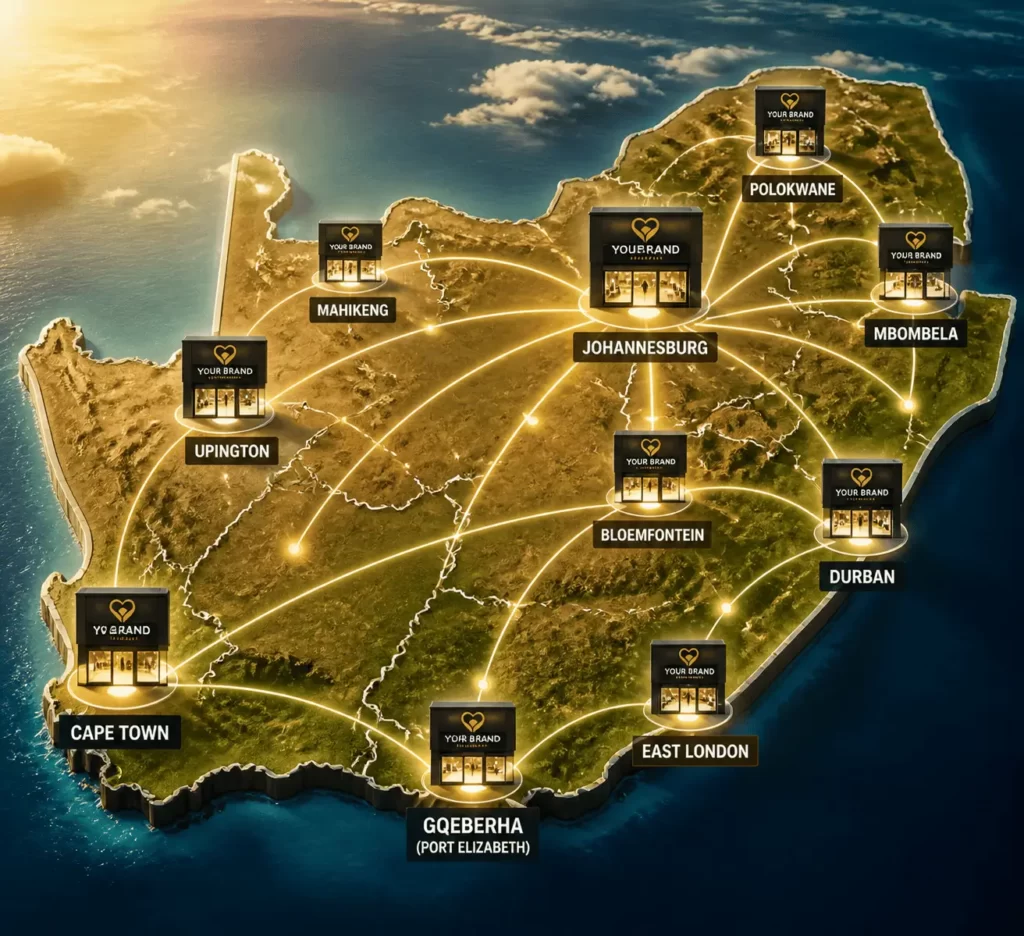
Where most business owners Get stuck
Even with all this knowledge, many entrepreneurs still struggle to move forward. Not because they lack ambition – but because they lack:
- Time
- Expertise
- Structured guidance
And that’s where the right partner makes all the difference.
Why Infinity Brands stands out In a space filled with consultants who deliver strategies and walk away, Infinity Brands takes a fundamentally different approach. They don’t just tell you what to do.
We build it with you – and for you.
Their model is rooted in one key principle: execution matters more than theory. Instead of handing over documents, we provide:
- Full franchise system development
- Legal and compliance structuring
- Operational systemisation
- Franchisee recruitment strategies
- Ongoing management and support
This aligns directly with the biggest pain point business owners face—the gap between planning and implementation.
Infinity Brands closes that gap.
Our approach is designed specifically for South African entrepreneurs who have already proven their business model but need a structured, scalable pathway to expansion.
And perhaps most importantly, we understand the local context – the regulatory landscape, the infrastructure challenges, and the realities of scaling in this market.
The bottom line
Not every business is franchisable, but many can become franchisable with the right structure, systems, and strategy.
If you’ve built a successful business and feel stuck at your current level of growth, it’s not a limitation of your potential. It’s a sign that your business is ready to evolve.
Your next step
If you’re serious about scaling your business without losing control, consistency, or profitability, the smartest move you can make is to start with clarity.
Get a free franchise readiness assessment or book a free consultation
Understand exactly where your business stands, what’s holding it back, and what it will take to turn it into a scalable franchise system, because growth shouldn’t require you to be everywhere at once.